Countries · Portugal

Portugal starts with your circumstances, not a visa label.

Portugal is where Chapter Europe currently has its deepest operating experience. We support both new residence planning and the next legal or practical steps for people who are already living here.
The legal route matters. So does the status you hold now, what has changed, family timing and what needs to happen next.
Tiled residential and mixed-use façades on Rua da Prata in Lisbon.

Country note

Portugal is the centre of Chapter Europe’s direct operating experience. We work with people planning residence and with people already here whose status, work, family or next legal step needs review.

The route can be the starting point, but it is not always the question. A strong Portugal plan looks at qualification, current status, evidence, sequencing and the practical life around the legal process — before arrival or after it.

How Chapter works here

Portugal is the centre of Chapter Europe’s direct operating experience. Vanessa Mororó leads Portuguese immigration and nationality legal work. Mónica Correia leads relocation strategy and the practical sequence of the move.

Question we would resolve first

Are you planning a new residence basis, or do you already hold Portuguese status that now needs renewal, conversion or a longer-term next step?

Discuss your situation in Portugal

Before or after arrival

Questions worth resolving around your status.

Open only the questions that matter to you. Longer answers can live in the Journal.

Do I need a Portuguese NIF before every residence visa?

No. A NIF can be useful and may be relevant to the practical setup, but it is not a universal pre-filing requirement for every residence-visa route. The route, filing post and evidence strategy determine what belongs in the file.

Do I need a Portuguese bank account before every visa?

No universal rule applies to every residence visa. Banking can support practical planning or a particular evidence strategy, but the requirement should be checked against the route and competent filing jurisdiction.

Does my family always need to wait for family reunification?

No. Residence-visa family accompaniment, resident-sponsor family reunification, temporary-stay accompaniment and EU-family residence are different frameworks. The principal applicant’s status and timing should be resolved first.

Is there a fixed minimum investment for D2?

There is no universal statutory €50,000 or €100,000 minimum investment for the ordinary D2 route. The credibility of the activity, evidence and overall financial position matter.

Can I still use real estate for a Portuguese Golden Visa?

Real-estate acquisition is not itself a qualifying ARI investment under the current regime. The current qualifying categories should be reviewed before any investment is treated as an immigration step.

How long will a Portuguese application take?

Statutory decision periods can be useful planning references, but they are not guaranteed end-to-end processing times. Appointment availability, document legalisation, authority capacity and requests for additional evidence can extend the real timeline.

Can Chapter help if I already live in Portugal?

Yes. The work can begin with the status you hold now: residence-permit stages, renewals, qualifying status changes or conversion, family, permanent residence, citizenship and connected practical matters can be scoped without treating you as a first-time mover.

What if my residence card no longer reflects how I live or work in Portugal?

That calls for a status review. We first look at the permit you hold, what has changed and which legal basis should apply now. A qualifying change or conversion may be relevant, but it should not be assumed before the current status and target basis are checked.

Orient the routes by goal

This changes what is shown, not whether a route is available to you.

All routes shown.

New residence routes

Portugal routes are useful only when the facts support them.

These are common starting points for a new residence route, not an automated eligibility result. If you already hold Portuguese residence, renewals, status conversion, permanent residence and citizenship are treated separately.

Retirement & own income

D7

Current benchmark

€920 / month

2026 first-adult means-of-subsistence reference. Household percentages apply; this is not a universal required savings balance.

A residence route for people establishing life in Portugal around pension or other stable own income rather than active remote employment.

Rules that shape the answer

  • The route should be tested against the actual source, continuity and evidence of own income.
  • The 2026 means-of-subsistence reference starts at €920/month for the first adult, with household percentages for additional adults and dependent children.
  • Accommodation and the residence stage after entry remain part of the wider plan.

Think twice when: Active remote employment or professional work is the main support for the move; D8 is usually the more relevant route to assess first.

Stronger fit when

  • Pension or retirement income supports the move.
  • Qualifying own income rather than active work is central to the residence plan.
  • Portugal is intended as a genuine residence base.

What we would clarify first

What income will actually support the move, and how much of it comes from own or retirement income rather than active work?

What could change the answer

The income source, consistency of evidence, family size, accommodation and whether active remote work is central to the plan.

Remote work / digital nomad

D8

Current benchmark

€3,680 / month

2026 residence-visa income reference based on four times the €920 Portuguese minimum monthly wage.

For employees and independent professionals who will live in Portugal while working remotely for an employer or clients outside Portugal.

Rules that shape the answer

  • The working relationship and evidence of remote activity matter as much as the job label.
  • For the residence-visa route, the statutory income test is linked to four times the Portuguese minimum monthly wage, measured against recent average income.
  • Tax residence and immigration residence are connected in practice but remain separate analyses.

Stronger fit when

  • You work remotely for an employer outside Portugal.
  • You provide qualifying remote professional services to overseas clients.
  • The income history and work structure can be evidenced clearly.

What we would clarify first

What is the real remote-work relationship — employment or professional services — and can the income history be evidenced cleanly?

What could change the answer

Employer/client location, contract structure, income history, family thresholds and whether the work remains genuinely remote from Portugal.

Employment in Portugal

D1

A residence route for non-EU nationals taking up qualifying dependent employment with a Portuguese employer.

Rules that shape the answer

  • A qualifying employment contract or promise of employment can be relevant to the route.
  • There is no universal rule that every D1 case requires a 12-month employment contract.
  • The filing strategy depends on the actual employment evidence and competent consular jurisdiction.

Stronger fit when

  • A Portuguese employer is offering dependent employment.
  • The employment evidence can support the national-visa application.
  • Family timing and the residence stage need to be planned alongside the work start.

What we would clarify first

What employment evidence exists with the Portuguese employer, and where will the national-visa application be filed?

What could change the answer

Contract or promise terms, role, filing jurisdiction, family timing and the intended start of work.

This route commonly touches

Entrepreneur & independent professional

D2

A residence route for founders, entrepreneurs and independent professionals carrying out genuine economic activity connected to Portugal.

Rules that shape the answer

  • There is no universal statutory €50,000 or €100,000 minimum investment for the ordinary D2 route.
  • The proposed activity, contracts, financial evidence and Portuguese setup need to make sense together.
  • Tax, social-security and business setup questions can require separate specialist responsibility.

Stronger fit when

  • You intend to build or operate a business in Portugal.
  • Independent professional activity is central to the move.
  • The activity already has evidence or commercial substance beyond an intention to relocate.

What we would clarify first

Is the move genuinely based on a business or independent professional activity that can be evidenced as more than an intention?

What could change the answer

Business substance, contracts, funding, professional activity, tax/social-security setup and the sequence of company or freelance registrations.

D3 / specialist routes

Highly qualified work

Portugal has several frameworks for highly qualified or specialist work. The role, employer, qualification and remuneration determine which one deserves attention.

Rules that shape the answer

  • D3, Tech Visa and the EU Blue Card are not interchangeable.
  • Employer status, qualification, remuneration and contract structure can change the applicable route.
  • Tech Visa adds an employer-certification layer that does not exist in every highly qualified case.

Stronger fit when

  • The role is academic, technical, specialist or otherwise highly qualified.
  • The employer and remuneration can be tested against more than one work framework.
  • You want to compare the route before the employer or worker commits to the wrong process.

What we would clarify first

Which work framework fits the actual employer, role, qualification, remuneration and contract structure?

What could change the answer

Employer certification, qualification level, remuneration, contract duration and whether D3, Tech Visa or EU Blue Card is the better fit.

Investment-linked residence

ARI / Golden Visa

An investment-linked residence framework for qualifying non-EU investors, with a low physical-presence model and current qualifying categories that do not include real-estate acquisition as a route by itself.

Rules that shape the answer

  • Current categories include qualifying job creation, research, cultural support, non-real-estate collective investment and specified company-capitalisation structures.
  • Real-estate acquisition is not itself a qualifying ARI investment under the current regime.
  • Residence, permanent residence and nationality are separate legal questions and should not be collapsed into one promise.

Stronger fit when

  • Investment is genuinely part of the residence strategy.
  • A low physical-presence model matters to the applicant.
  • The qualifying investment category can be analysed before a product or asset is selected.

What we would clarify first

Which qualifying investment category is being considered, before any product or transaction is selected?

What could change the answer

The investment category, regulated-advice needs, source-of-funds evidence, timing and whether investment residence is actually the right objective.

Move together or join later

Family routes

Portugal uses different family mechanisms depending on whether the principal applicant is still applying for a residence visa, already holds residence, is on a temporary stay or is exercising EU free-movement rights.

Rules that shape the answer

  • Residence-visa family accompaniment is legally different from post-residence family reunification.
  • The 2025 family-reunification changes introduced sponsor-residence periods with important statutory exceptions.
  • EU citizens and qualifying family members use a separate free-movement framework where the EU-law conditions are met.

Stronger fit when

  • A spouse, partner, child or other qualifying family member needs to be built into the move.
  • The family is deciding whether to move together or in stages.
  • The sponsor status or nationality could change the legal mechanism.

What we would clarify first

Is the principal applicant still applying, already resident, temporarily staying, or exercising EU free-movement rights?

What could change the answer

Principal status, nationality, family relationship, timing, waiting-period exceptions, financial means and accommodation.

Free movement

EU citizens & family

EU citizens and their qualifying family members use a separate residence framework from Portuguese national residence visas.

Rules that shape the answer

  • EU citizens staying beyond three months generally formalise residence through the applicable registration framework.
  • A qualifying non-EU family member can use the EU-family residence-card process where the conditions are met.
  • CRUE is one EU residence document, not a catch-all term for every EU residence status.

Stronger fit when

  • The principal person is an EU citizen moving to Portugal.
  • A non-EU family member is accompanying or joining an EU citizen.
  • Permanent EU residence needs to be planned after the qualifying residence period.

What we would clarify first

Who is the EU principal, what residence basis applies, and which family member needs registration or a residence card?

What could change the answer

EU nationality, work/resources/study basis, family relationship, entry status and length of residence.

Under one year

Temporary Stay Visa

For qualifying temporary purposes of less than one year, including certain remote work, professional activity, academic work, study, family accompaniment and other statutory categories.

Rules that shape the answer

  • A Temporary Stay Visa is not the same as a Residence Visa or a temporary Residence Permit.
  • The route should match a genuinely temporary purpose rather than being chosen simply because the stay looks shorter.
  • Family accompaniment can have a separate basis, with a seasonal-work exception.

Stronger fit when

  • The purpose is genuinely temporary and under one year.
  • Remote work or another qualifying temporary activity can be evidenced.
  • You want to confirm that a residence route would not be more appropriate.

What we would clarify first

Is the purpose genuinely temporary and under one year, or is the person actually building residence in Portugal?

What could change the answer

Purpose, duration, work or income structure, family accompaniment and whether a residence route is more appropriate.

Where the move becomes real

Where Portugal becomes everyday life.

Residence status answers one part of life in Portugal. The place still shapes the ordinary week. These are starting points, not rankings.

Tiled Pombaline façade on Rua Augusta in Lisbon.

Lisbon

Often considered by

International professionals, founders and families wanting a connected city base.

Living here +

Urban, international and fast by Portuguese standards.

Housing and neighbourhood decisions can enter the timeline earlier than people expect.

Choosing the neighbourhood often matters more than choosing “Lisbon”.

Casa Sommer and its street-facing civic context in Cascais.

Cascais

Often considered by

Families, retirees and people looking for coast without disconnecting from Lisbon.

Living here +

Coastal, polished and family-oriented, with different pockets from Cascais to Carcavelos.

Schools, commuting and walkability can change the right micro-location considerably.

The coastal walk is an excellent reminder that not every part of relocation needs a spreadsheet.

Street-facing house and residential architecture in Estoril.

Golden Coast

Often considered by

Families and people wanting coast, schools and proximity to Lisbon without living in the city.

Living here +

A chain of coastal communities rather than one centre, with daily life shaped by commute, beaches and local services.

Carcavelos, Estoril and the Cascais line can feel very different even when the map makes them look close.

The useful question is often not “Cascais or Lisbon?” but which stretch of coast works for your actual week.

Houses with tiled façades on an ordinary street in Porto.

Porto

Often considered by

People wanting a smaller city, strong culture and a less frenetic rhythm than Lisbon.

Living here +

Compact, neighbourhood-led and increasingly international.

The north has its own housing, climate and community rhythm; it should not be treated as “Lisbon but smaller”.

A slow afternoon around Cedofeita tells you more than another checklist of monuments.

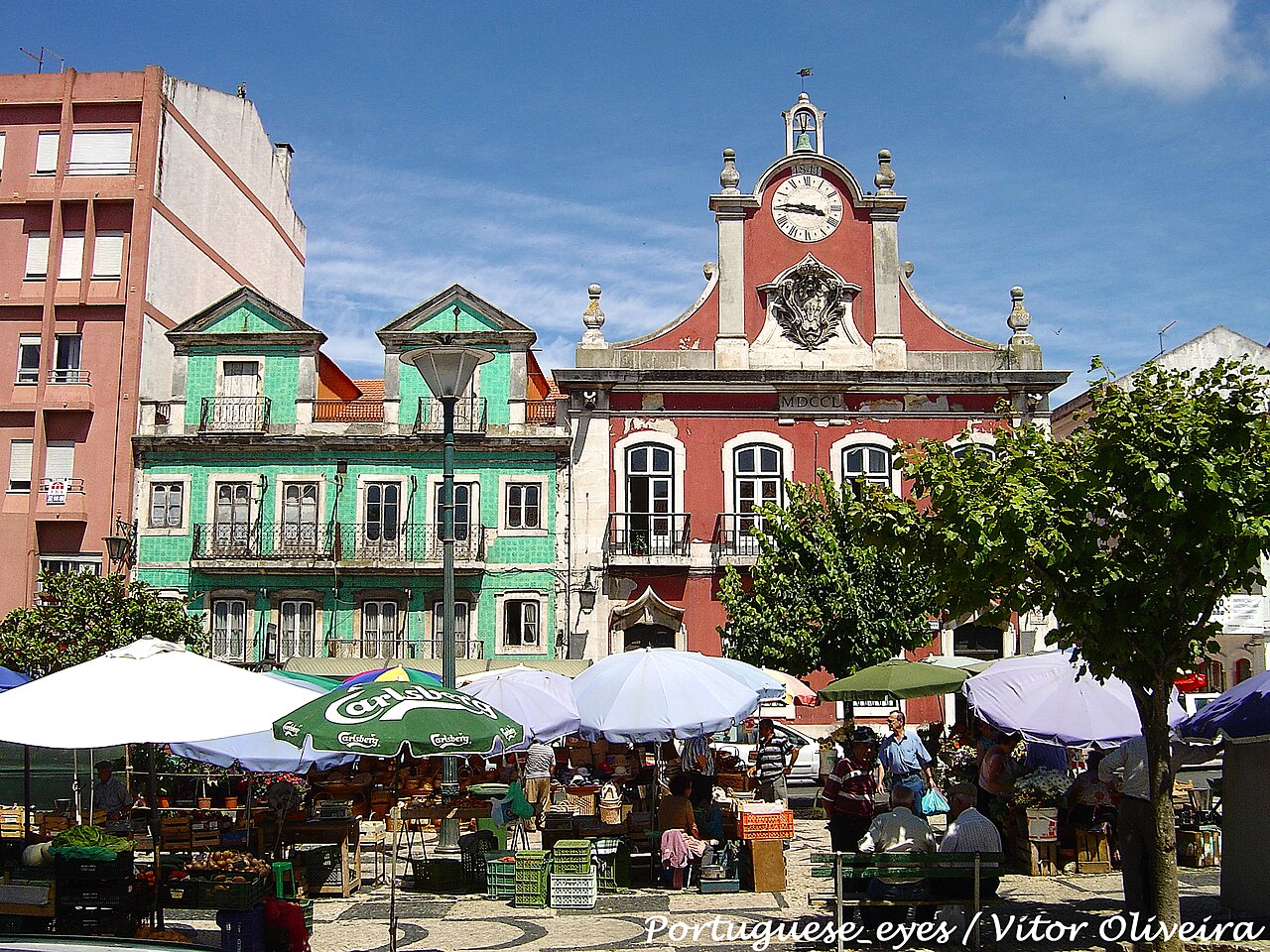
Market square and traditional buildings in Caldas da Rainha.

Silver Coast

Often considered by

Retirees, families and remote workers looking for smaller communities, Atlantic coast and more space.

Living here +

Town-and-coast living around places such as Caldas da Rainha, Óbidos and Nazaré, with a slower year-round pace.

A car and the distance to schools, healthcare or Lisbon can matter more here than in the larger cities.

Caldas can be a better clue to everyday life than the beach town you first found on Instagram.

Street and building context in the old town of Lagos, Algarve.

Algarve

Often considered by

Retirees, families and people prioritising climate, golf, beaches and established international communities.

Living here +

Coastal and seasonal, with a big difference between resort areas and year-round towns.

Car dependence, healthcare access and winter rhythm are worth testing before choosing a location.

Visit in January as well as July if you are thinking of calling it home.

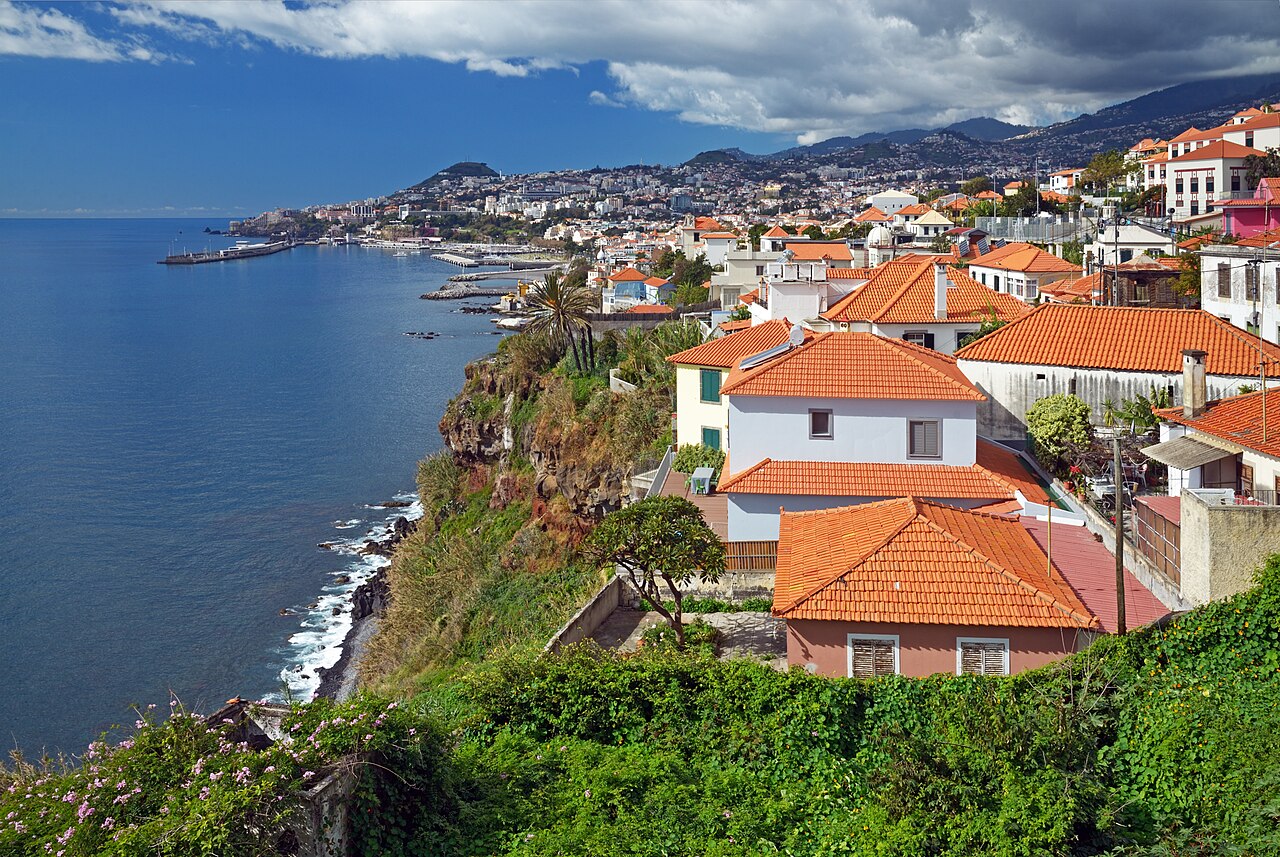
Residential hillside and urban context in Funchal, Madeira.

Madeira

Often considered by

Remote workers and people wanting island life with strong infrastructure and an international community.

Living here +

Outdoor, compact and community-led, with Funchal as the practical centre.

Island logistics and housing supply make planning different from mainland Portugal.

The first thing people notice is the view. The second is how quickly elevation changes a ten-minute walk.

House fronts on Rua Capitão João Lopes in Ericeira.

Ericeira

Often considered by

Surfers, remote workers and people looking for a smaller coastal community within reach of Lisbon.

Living here +

Surf-led, international and noticeably more seasonal than the capital.

A car, winter rhythm and housing supply matter more once the move becomes year-round rather than a long stay.

The surf is the obvious reason to visit. The ordinary Tuesday is the reason to decide whether to stay.

Still comparing?

Keep the country decision open until the facts support it.

Chapter Europe

Chapter EuropeImmigration & Relocation Advisory

© 2026 Chapter Europe. All rights reserved.